
Recruiting software for SMBs: what you actually need
Let us be blunt: ResumeRank is not a full ATS. You do not track a seven-stage pipeline in it, you do not post ads to fifteen job boards from it, and you do not run onboarding there. It is screening and decision software, and that is exactly what a small business opening between 2 and 15 roles a year is missing.
At that volume, a full ATS costs more to set up than it returns in time saved: stages to configure, managers to train, history to migrate — and six months later half the applications still arrive by email. A small company’s problem is almost never candidate tracking; a spreadsheet handles that. The problem is the pile of 80 resumes and the one hour available to deal with it.
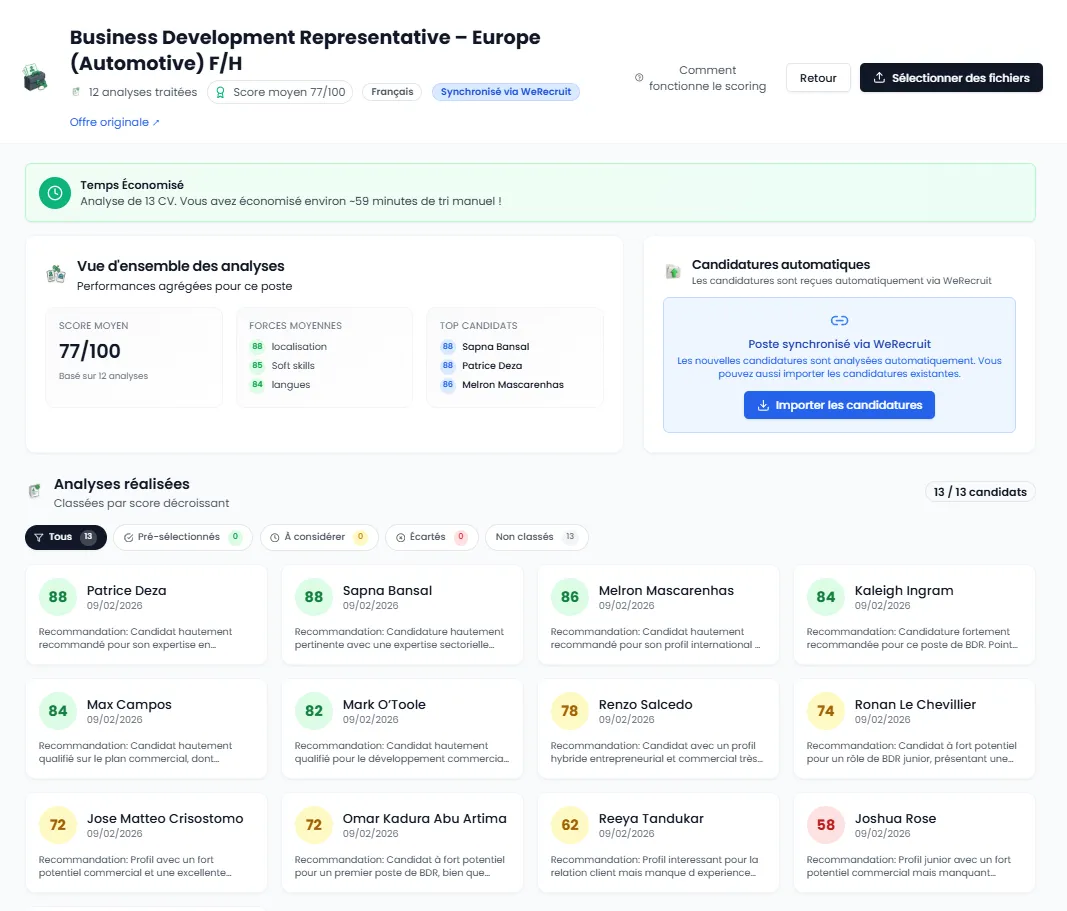
So HR recruiting software that earns its place at this scale does three things: it gathers the applications, it evaluates them with the same grid, and it hands you a decision you can defend. The rest — tracking, follow-ups, notes — you already handle in the tools you have, and the day you do need an ATS, ResumeRank plugs into it instead of replacing it.
- What it does: centralise applications, score out of 100, compare, prepare the interview, export.
- What it does not do: multi-posting, stage-based pipelines, onboarding management.
- What it saves you: an annual licence and a configuration project for five hires a year.
- What it leaves alone: your current tools, your inbox and the way your team works.